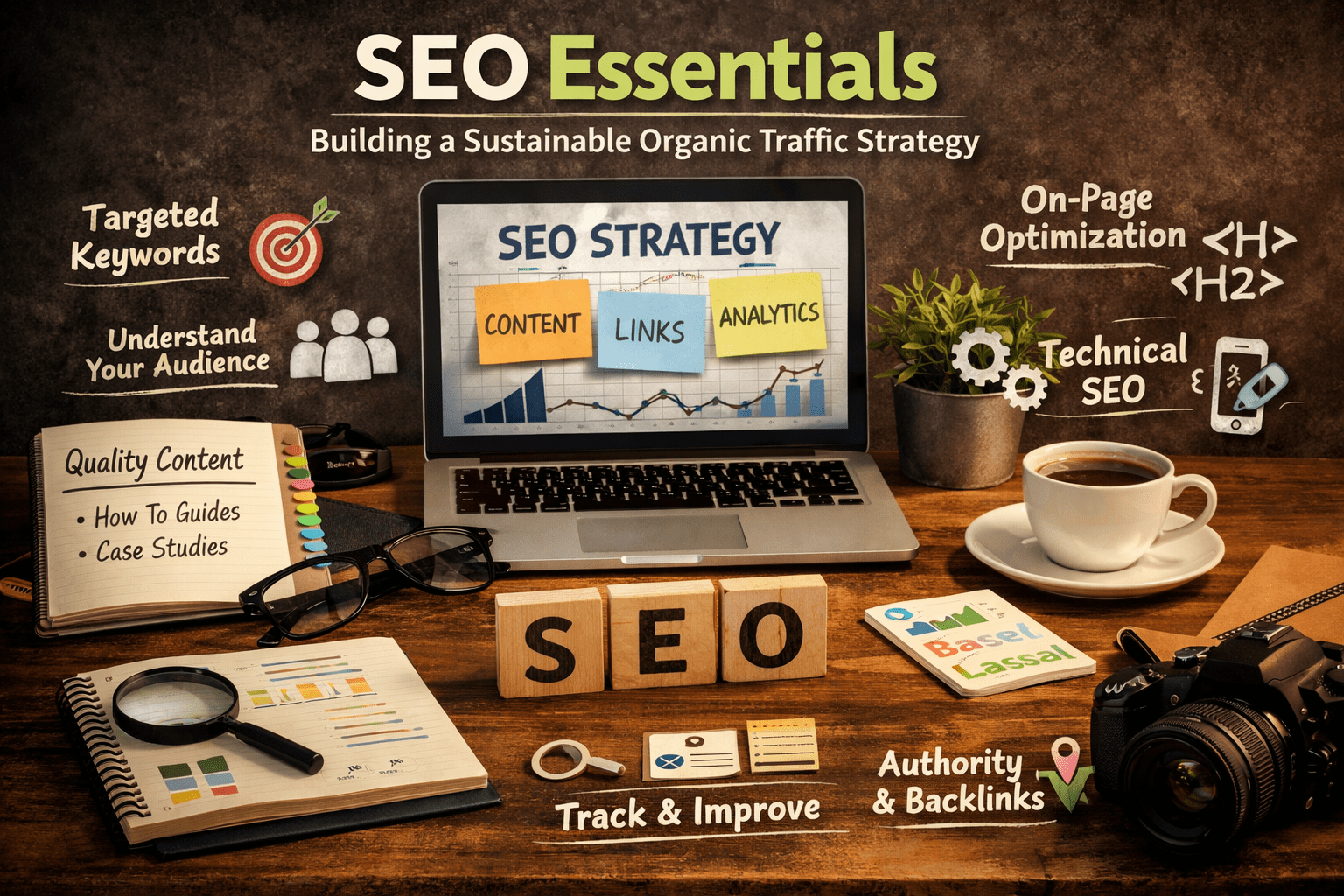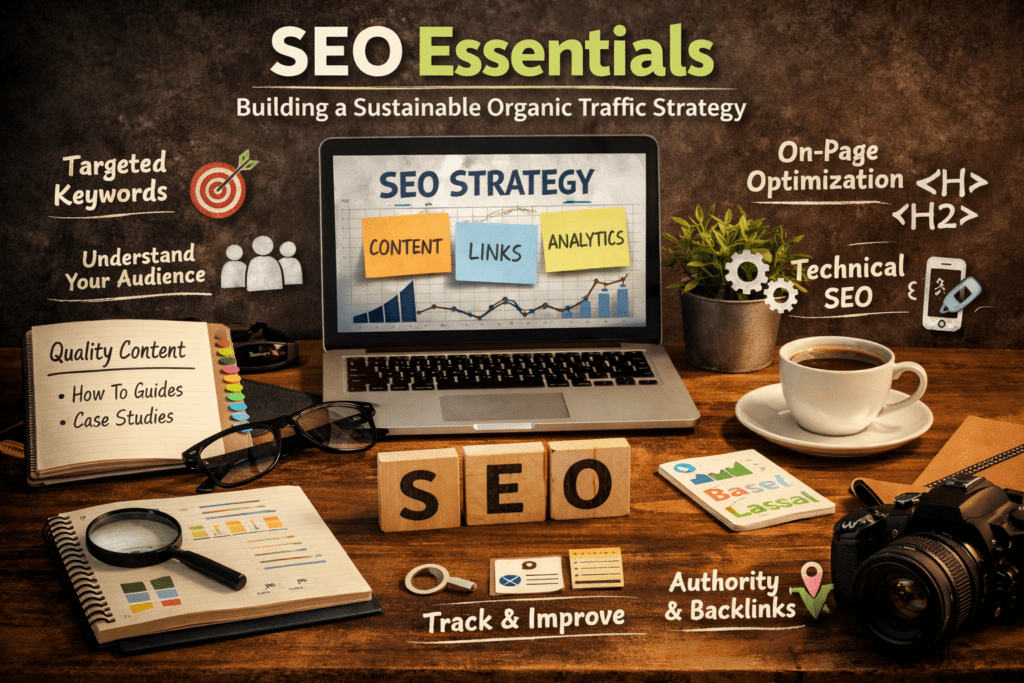
In today’s fast-changing digital world, where most people use mobile devices to go online and AI tools are changing how we find information, organic traffic is one of the best ways to grow your business. It’s reliable and cost-effective compared to paid ads. Traditional SEO still matters, but new approaches like Generative Engine Optimization (GEO) help your content appear in AI answers too.
This guide covers the basics: keyword research, on-page optimization, technical SEO (with a focus on mobile and voice search), off-page tactics, and ways to rank higher for competitive terms. It draws from current trends, where people often use AI for shopping and searches spike around self-improvement and starting a business.
These steps work for startups, small businesses, or any company looking for long-term visibility. Whether you’re just starting or running an established business, follow this roadmap to attract real visitors and leads.
Why Organic Traffic Matters More Than Ever
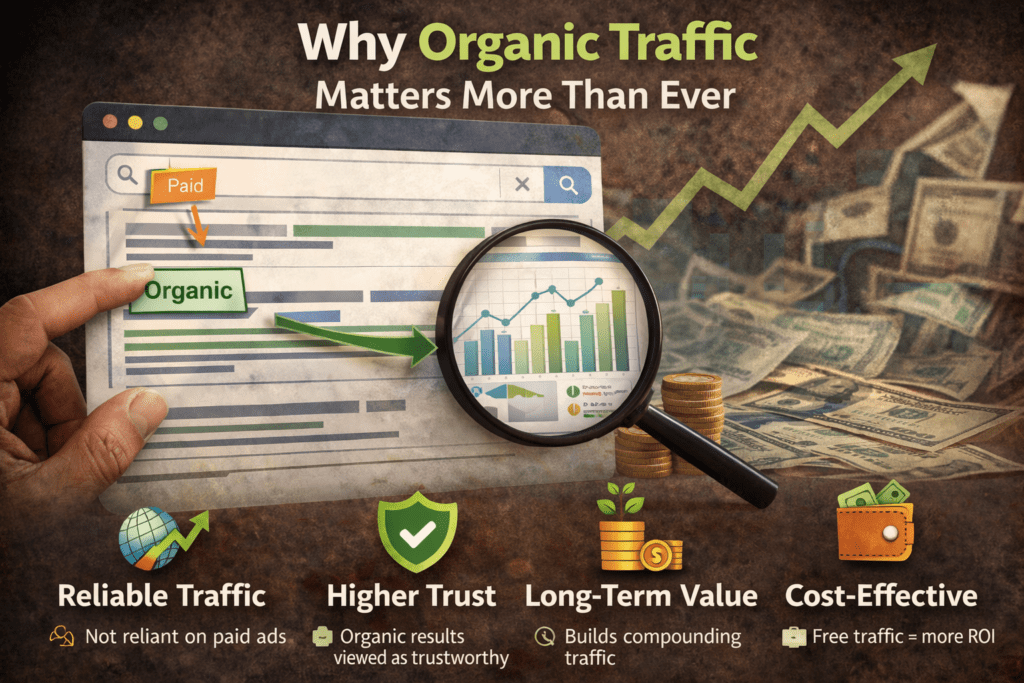
Organic search is powerful because it lasts. Paid ads stop when you stop paying, but good SEO keeps bringing visitors for months or years with little extra cost. It often gives much higher returns over time.
Key changes in 2026:
AI-driven discovery
Many people now use AI tools like ChatGPT for answers and shopping decisions. Visibility means getting mentioned or cited in AI responses (this is called GEO), not just appearing in Google results.
Mobile-first world
Most searches happen on phones, so fast loading and good mobile experience are essential.
Voice and conversational search
People ask questions out loud, like “where can I find a good plumber near me?” This favors natural, easy-to-read content.Local searchesTerms like “near me” or city-specific searches are very common, making tools like Google Business Profile very important.
Self-improvement trend
Searches for “how to start a business,” “how to improve skills,” or “how to get better” are growing fast—great for helpful content.If you ignore these changes, competitors who adapt will take the lead. The good news is that many niches still have room to win with smart SEO.
Step 1: Keyword Research – Find What People Really Search For
Keyword research is the starting point. In 2026, focus on search intent, location (if relevant), and what works for AI.
Tools to Use (many are free or low-cost):
– Google Keyword Planner
– Google Trends
– AnswerThePublic or AlsoAsked (for question ideas)
– SEMrush or Ahrefs (try free versions first)
Key Tactics
1. Go for long-tail and specific keywords
Broad terms like “SEO services” are hard to rank for, but “SEO agency for startups 2026” has less competition and better results.
2. Include conversational and voice phrases Optimize for questions: “how to rank on Google,” “best digital marketing agency.”
3. Watch trends Look for rising topics like “how to start a business” and create content around them.4. Check competitors Search your main terms, see the top results, and find what they miss (like videos, examples, or fresh data).Aim for a mix: some popular head terms and mostly long-tail keywords with clear buyer intent. Track them in a simple spreadsheet with search volume, difficulty, intent, and priority.
Step 2: On-Page SEO – Make Every Page Strong
On-page SEO helps turn keywords into good rankings. Focus on content that truly helps the reader.
Core Elements:
Title tags & meta descriptions
Include your main keyword: “Best SEO Services 2026 | Grow Organic Traffic & Leads”
Headings (H1-H3)
Use H1 for the main topic, H2/H3 for subtopics or questions.
Content quality
Write in-depth pages (1,500–3,000+ words for main topics). Show expertise with author info, sources, and real examples. Follow E-E-A-T: Experience, Expertise, Authoritativeness, Trustworthiness.
Internal linking
Link related pages to build topic strength.
Images & alt text
Compress images for speed; use descriptive alt text like “business owner checking Google rankings on phone.”
Schema markup
Add structured data for local business, FAQs, or how-to guides to get rich results.
For AI/GEO: Write clearly and with authority, use facts and sources, answer questions directly, and add unique insights so AI tools are more likely to mention you.
Step 3: Technical SEO – The Hidden Foundation
Technical problems can stop your content from ranking at all. With so many mobile users, focus here first.
Must-Fix Priorities
1. Mobile-first indexing
Make sure your site works perfectly on phones (responsive design).
2. Core Web Vitals
Aim for fast loading (LCP under 2.5 seconds), quick response (INP low), and stable layout (CLS low). Compress images, clean up code, and use a CDN if you can.
3. Site speed
Use Google PageSpeed Insights; target high scores, especially on mobile.
4. Crawlability
Fix robots.txt issues, submit a sitemap in Google Search Console, and check for errors.
5. HTTPS & security
Use a secure connection for trust.
6. Structured data
Helps with voice search and rich results.
7. Indexation
Don’t index low-value pages; request indexing for new ones.
Check your site monthly with Google Search Console and free tools.
Step 4: Off-Page SEO – Build Trust and Authority
Off-page SEO shows search engines your site is trustworthy. Focus on quality, not just quantity.
Effective Tactics:
Google Business Profile
Claim it, add photos, services, update regularly, and reply to reviews. This helps a lot with local results.
Citations
List your business consistently on directories (name, address, phone).
Backlinks
Get links from guest posts, partnerships, or helpful mentions on relevant sites.
Reviews
Ask for real reviews and respond to them.
Social sharing
Post content on platforms like LinkedIn or X to spread it.
Avoid shortcuts or low-quality links—penalties can hurt badly.
Step 5: Ranking Higher for Competitive Terms
For tough keywords like “digital marketing agency“:
– Strengthen your Google Business Profile with reviews and updates.
– Create very specific content, like “SEO Guide for Startups 2026.”
– Build topic clusters: one main pillar page linking to many related articles.
– Make content AI-friendly: clear answers, sources, and unique data.
– Track results in Google Search Console and adjust.
Many top-ranking sites combine strong profiles, fast mobile sites, and regular helpful content.
Measuring Success & Long-Term Maintenance
Track these:
– Organic traffic (Google Analytics)
– Keyword rankings
– Leads or sales from organic visitors
– Visibility in local results or AI answers
Review every few months. Update old content, fix problems, and adjust to new changes (like more focus on GEO).
Conclusion: Start Building Your Strategy Today
SEO in 2026 rewards consistent effort and staying up-to-date. Begin with a technical check, optimize your Google Business Profile, research keywords, and create valuable content regularly. Over time, you’ll get steady traffic that lasts longer than any ad.
Do a quick site audit now—your next customers are searching for you right now.